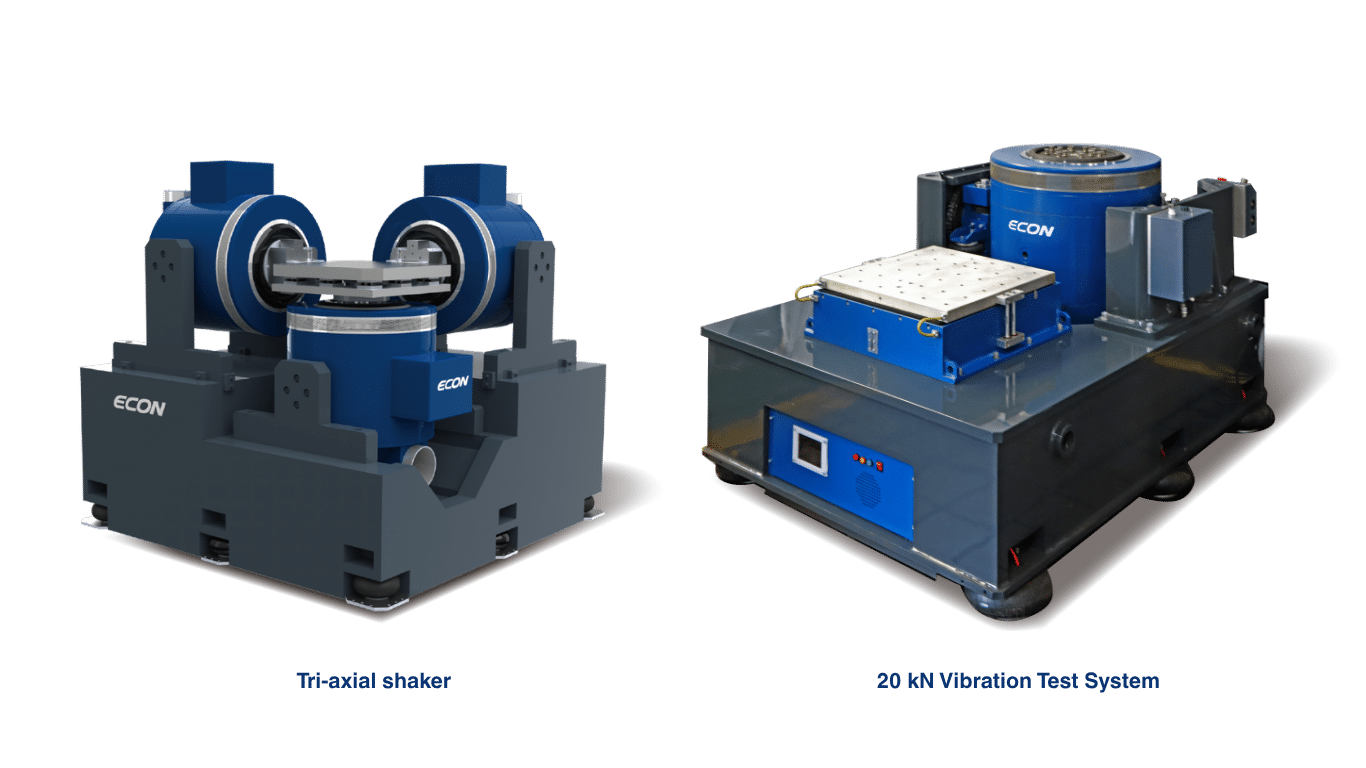
Single-Axis or multi-axis: which test method should be chosen?
With the growing use of multi-axis vibration testing in automotive, aerospace, rail transportation, and other industries, engineers may ask a reasonable question:
Will multi-axis shakers eventually replace single-axis shakers?
Not necessarily.
The two approaches address different testing requirements. Multi-axis testing can better reproduce complex real-world vibration environments, while single-axis testing remains a practical and effective solution for many standardized and directional vibration tests.
The key is not which one is “better,” but which excitation method best represents the engineering objective.
The key is to determine which excitation method best suits the intended technical objective.
Single-Axis Shaker
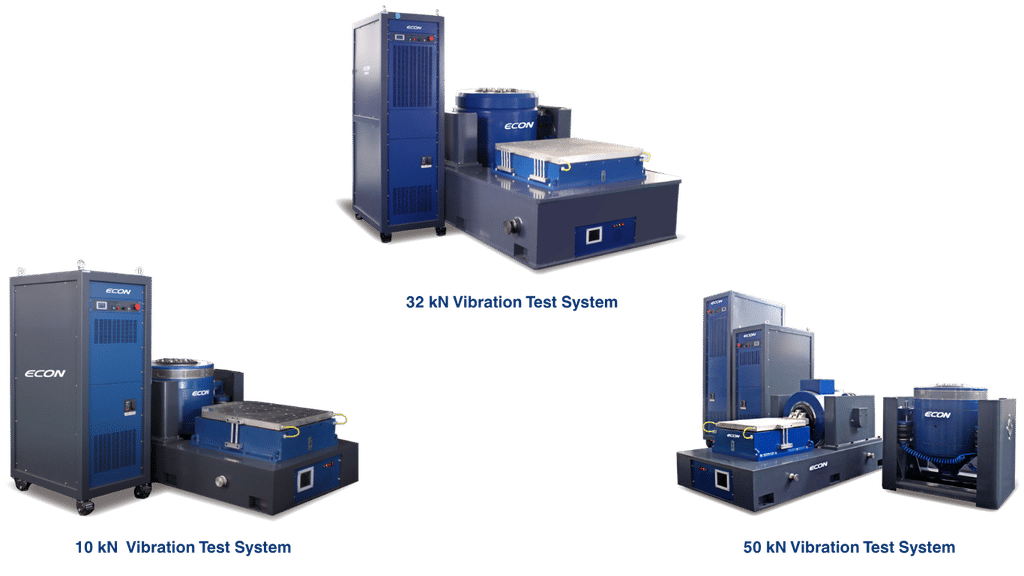
Simple, Stable, and Well Established. A single-axis shaker applies controlled excitation primarily along one axis, typically X, Y, or Z.
| Advantages | What that entails |
|---|---|
| Simpler control | Fewer excitation variables make control and test setup relatively straightforward |
| High repeatability | Limited cross-axis interaction makes it easier to achieve stable and repeatable test conditions |
| Lower system complexity | Compared with multi-axis systems, equipment, control channels, and supporting structures are generally simpler |
| Mature test methods | Many established vibration standards and qualification procedures are based on single-axis excitation |
For tests where the objective is to evaluate a product’s response to vibration in a specific direction, single-axis excitation can be entirely appropriate.
Its main limitation is equally clear: real-world vibration rarely occurs in only one direction.
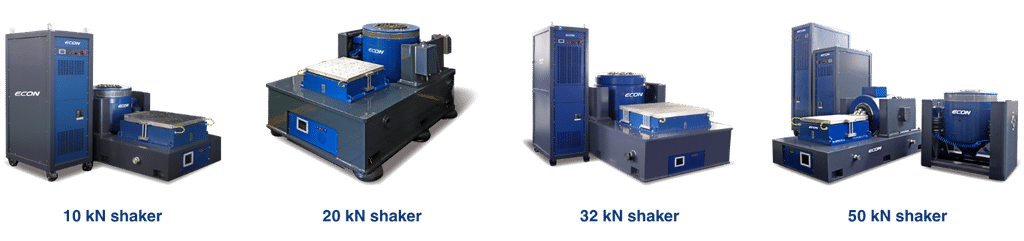
Uniaxial testing remains a particularly relevant solution for directional, standardized, and reproducible tests.
Multi-Axis Shaker
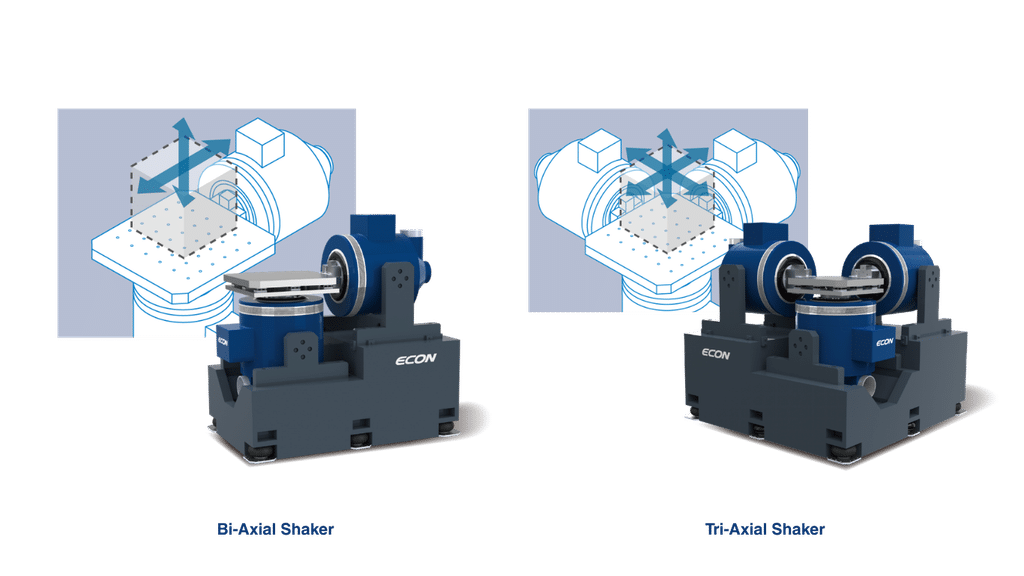
Closer to Real Operating Conditions. In actual service environments, vibration is often simultaneous and coupled across multiple directions.
🚗 Automotive → simultaneous vertical, longitudinal, and lateral excitations
✈️ Aerospace → multidirectional structural loading
🚆 Rail → simultaneous and coupled excitations
🔌 Electronics → interactions between different directions
A multi-axis shaker can reproduce these excitations simultaneously, allowing engineers to investigate:
- Multi-directional structural response,
- Cross-axis coupling,
- Interaction between excitation directions,
- More realistic component and assembly behavior.
This can provide a more representative test environment than sequentially testing X, Y, and Z axes independently.
However, multi-axis testing also introduces greater complexity. Multiple excitation channels must be coordinated, and engineers must consider synchronization, phase relationships, cross-axis coupling, control algorithms, and fixture dynamics.
As a result, multi-axis systems generally require more sophisticated control strategies and test planning.
Single-Axis vs. Multi-Axis: Which Should You Choose?
| Consideration | Single-Axis Shaker | Multi-Axis Shaker |
|---|---|---|
| Excitation | One primary direction | Multiple directions simultaneously |
| Control complexity | Relatively low | Higher |
| Test repeatability | Generally high | More dependent on system control |
| Realism | Suitable for directional environments | Better for coupled environments |
| Cost and setup | Lower complexity | Higher complexity |
| Typical use | Standard qualification, directional testing | Complex environment simulation |
A single-axis shaker is often the better choice when the test standard specifies single-axis excitation, when the dominant vibration direction is known, or when controlled and repeatable directional testing is the primary objective.
A multi-axis shaker becomes more valuable when the actual operating environment involves significant simultaneous excitation and the interaction between directions may affect product performance or failure mechanisms.
Beyond “Single-Axis vs. Multi-Axis”
Multi-axis vibration testing should not simply be viewed as an upgraded version of single-axis testing.
The more important question is:
Does the test need to reproduce a single-direction excitation, or the coupled vibration environment experienced by the product in service?
Single-axis shakers remain highly relevant because they provide a mature, controlled, and efficient approach for many engineering tests.
Multi-axis shakers, meanwhile, offer an important advantage when environmental realism and multi-directional coupling are critical.
Ultimately, the best vibration test is not necessarily the most complex one. It is the one that most effectively reproduces the conditions relevant to the engineering problem being investigated.
A complex vibrational environment to replicate?
Our experts will help you determine the most appropriate testing strategy:
uniaxial, multiaxial, or a complementary approach.